

5 Design Choices That Quietly Increase Perceived Value
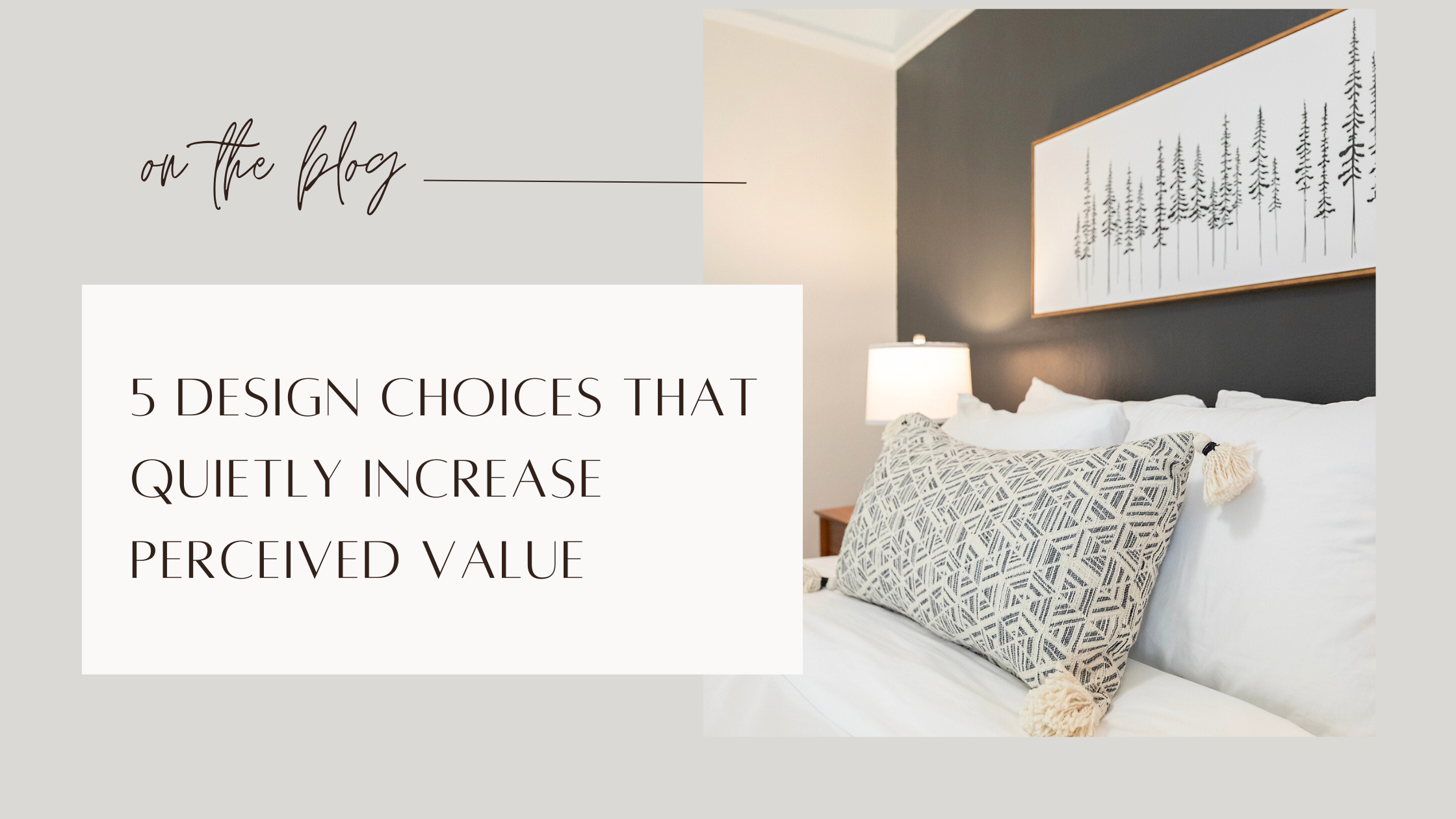
Not every design decision carries the same weight. Some choices photograph beautifully but don’t change how a home is perceived. Others, often the quieter ones, subtly signal value, care, and quality long before a buyer ever looks at the price. When a home feels easy to understand and effortless to move through, buyers assume it’s worth more. That is perceived value at work and design plays a major role in creating it. Here are five design choices that consistently do exactly that.
1. Clear, Intentional Layouts
One of the fastest ways perceived value drops is confusion.
If buyers aren’t sure:
where the dining space is
how a room is meant to function
or whether furniture actually fits
they subconsciously downgrade the home.
A clear layout doesn’t mean large furniture or fully filled rooms. It means:
defining zones
giving each space a purpose
allowing comfortable circulation
When a layout makes sense at a glance, buyers feel confident and confidence drives stronger offers.
2. Lighting That Feels Layered, Not Harsh
Good lighting rarely gets noticed but bad lighting always does.
Homes with layered lighting feel:
warmer
more expensive
more intentional
This doesn’t require a full lighting overhaul. Often it’s as simple as:
balancing overhead lighting with lamps
warming up bulb temperatures (we recommend soft white throughout the home)
drawing attention to corners that previously felt flat or dim
Light affects mood more than almost anything else in a space. When it’s done well, buyers don’t think “nice lighting.”
They think “this feels good.”
3. Neutral Foundations With Thoughtful Contrast
Neutral doesn’t mean boring, it means flexible.
Homes that perform best visually tend to have:
calm, cohesive base colors
contrast introduced through texture, scale, and a few well-chosen moments
This allows buyers to imagine their own life in the space while still feeling a sense of personality and depth.
Too much contrast feels busy.
Too little feels flat.
Balance is what reads as value.
4. Scale That Matches the Space
Furniture that’s too large overwhelms.
Furniture that’s too small makes rooms feel underwhelming.
Proper scale quietly communicates:
comfort
proportion
intentionality
It also helps rooms photograph better and feel more substantial in person.
When scale is right, spaces feel complete even if they’re minimally styled.
5. Consistency From Room to Room
Buyers don’t evaluate rooms in isolation. They experience a home as a whole.
Consistency in:
color temperature
style direction
level of finish
creates a sense of cohesion that reads as polish and care.
A home doesn’t need to match perfectly from room to room , but it should feel like it belongs together. That continuity is one of the strongest signals of perceived value.
Why These Choices Matter
Perceived value isn’t about adding more.
It’s about removing friction.
When design choices reduce uncertainty, buyers relax. They linger. They imagine. And when that happens, price becomes less of a sticking point.
These same principles apply beyond for-sale homes:
Short-term rentals that book faster
Interiors that feel good to live in long-term
Spaces that photograph honestly and perform well online
Design works hardest when it feels effortless.
The Takeaway
Homes don’t feel valuable because they’re expensive.
They feel valuable because they’re clear, balanced, and intentional.
The most effective design choices don’t shout for attention they quietly do their job.
And when design performs well, everything else tends to follow.